As a BCBA, one of the most common concerns I hear from parents is, “Why does my child react so strongly to certain things?” It might be noise, clothing, transitions, food textures, or even something that seems small to us. Often, the missing piece in that question is sensory processing.
If your child has autism, sensory differences are not unusual. In fact, they are very common. Understanding them can completely change how we respond and support our kids.
What Is Sensory Processing?
Sensory processing is how the brain takes in information from the environment and makes sense of it. This includes sounds, sights, touch, movement, and body awareness. For some children with autism, the brain processes this input differently.
Your child may be over responsive. That can look like covering ears, refusing certain clothes, avoiding busy places, or becoming overwhelmed quickly.
Your child may be under responsive. That can look like not noticing their name being called, having a high pain tolerance, or seeming unaware of messes on their hands or face.
Some children are sensory seeking. They may constantly move, crash into things, spin, jump, or squeeze tightly. They are not trying to be difficult. Their nervous system is asking for input.
When we shift from seeing behavior as defiance to seeing it as communication, everything changes.
Where Occupational Therapy Comes In
Occupational therapy plays a huge role in supporting sensory regulation. OT is not just about handwriting or fine motor skills. It is about helping children participate more comfortably and independently in daily life.
An occupational therapist will typically assess your child’s sensory profile and identify patterns. They look at what triggers dysregulation and what helps your child feel calm and organized.
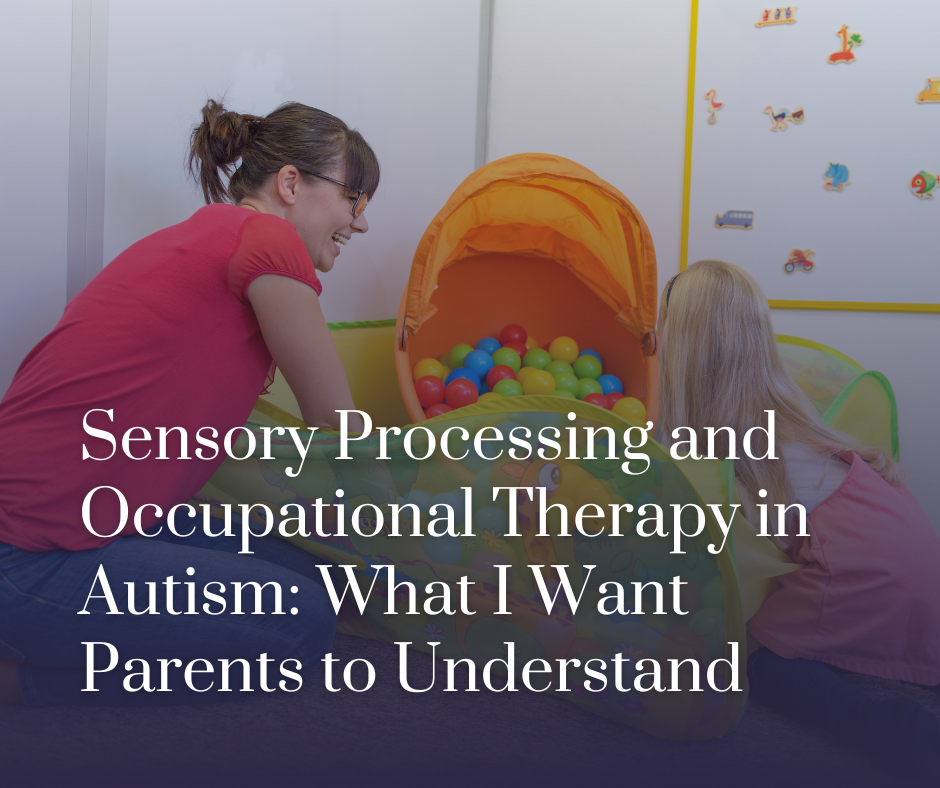
Therapy may include swinging, climbing, deep pressure activities, textured play, fine motor work, or structured movement. It often looks like play, but it is very intentional. The goal is to help your child’s nervous system regulate more effectively so they can focus, learn, and engage.
As someone who works closely with OTs, I always emphasize collaboration. When ABA and OT align, we can support regulation and skill development at the same time.
What Is a Sensory Diet?
You might hear the term sensory diet. This is simply a planned set of sensory activities built into your child’s day to help maintain regulation. It could be movement breaks before table work, deep pressure before bedtime, or structured heavy work after school.
It is not rigid. It is individualized and responsive to your child’s needs.
What You Can Do at Home
Start by observing patterns. When does your child seem overwhelmed? When do they seem calm and organized?
Create predictable routines. Offer structured movement breaks. Provide quiet spaces when needed. Most importantly, approach challenging moments with curiosity instead of frustration.
Instead of asking, “How do I stop this behavior?” try asking, “What is my child’s body telling me right now?”
Sensory differences are not something to eliminate. They are something to understand. With the right support, collaboration, and consistency, your child can build stronger regulation skills and participate more fully in daily life. And you can feel more confident knowing you are responding to the root of the need, not just the behavior on the surface.