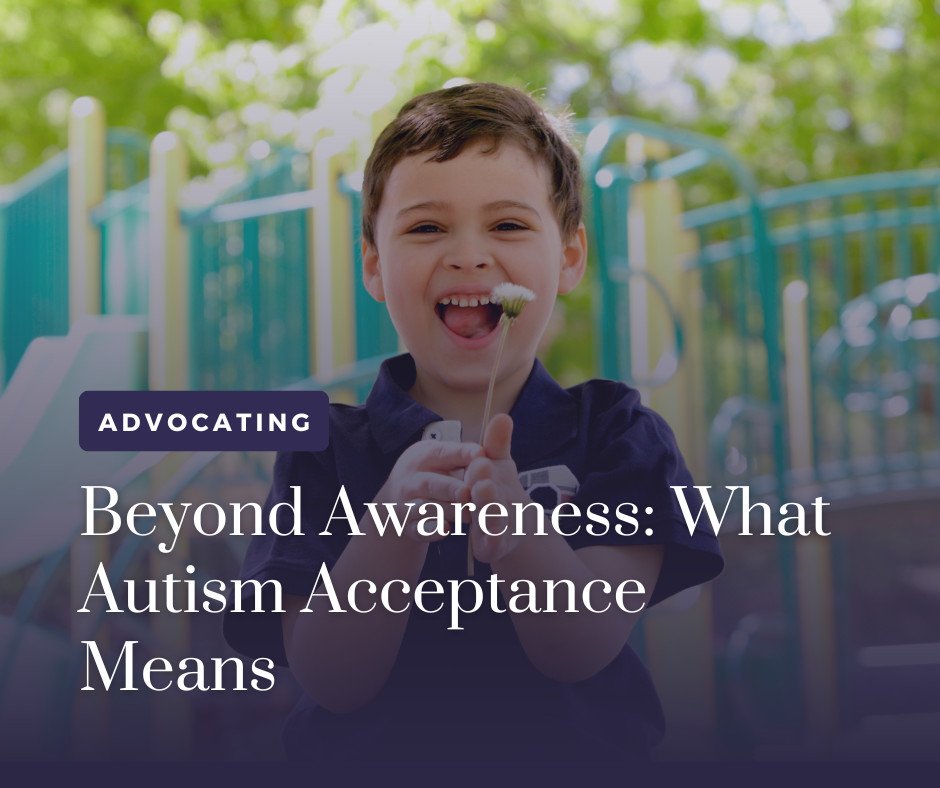
A young boy holding a daffodil. The title says “Beyond Awareness: What Autism Acceptance Means.”
By Jessica Camp, MS, Director of Franchise Operations
In recent years, we’ve seen a welcome increase in autism awareness. Blue puzzle pieces, hashtags, social media campaigns, and fundraising events have brought autism into mainstream conversations. More people know the word “autism” than ever before. Awareness matters — but awareness alone is not enough.
Awareness simply acknowledges that autism exists. Acceptance takes us further. Acceptance is where meaningful change happens. It is where autistic individuals are not just seen but understood, supported, and valued for who they are.
As I have shared with my team and the families we serve:
“Autism acceptance is more than awareness—it is the active practice of seeing, supporting, and celebrating every child for exactly who they are. It means recognizing the incredible strengths of autistic individuals—even when they’re misunderstood by the world around them. It means empowering children and families with empathy, not pity. With respect, not restriction. And with the belief that every child already brings value, just as they are. Because without difference, there’s no perspective. And without perspective, there’s no progress.”
The Limits of Awareness
Awareness might tell you that 1 in 31 children in the U.S. are diagnosed with autism. It might inform you that autism is a spectrum, or that sensory processing differences, communication challenges, and repetitive behaviors are common. But these facts only scratch the surface.
Too often, awareness campaigns unintentionally flatten autistic experiences into broad, limiting stereotypes: the nonverbal child, the socially awkward genius, the tantrum-prone, the isolated savant. These narratives overlook the vast diversity within the autistic community. Autism is not one story — it’s millions of unique stories, each as complex and valuable as any other.
The Essence of Autism Acceptance
Acceptance demands more than statistics and labels. It requires us to step into the lived experiences of autistic individuals and their families. As a professional in the field of Applied Behavior Analysis (ABA), I see every day how critical it is to move beyond assumptions and truly listen. Acceptance asks us to challenge our own biases and see the world through a different lens by inviting feedback, asking open-ended questions, and remaining flexible in our approach.
Acceptance means actively including autistic individuals across every environment—home, school, community, and workplace. For many young children, this inclusion begins with individualized, evidence-based 1:1 therapy that builds the foundational skills needed for long-term success in group settings like schools. While schools play a crucial role later in development, early intervention is often where children receive the most targeted support for communication, adaptive functioning, social engagement, and emotional regulation.
Acceptance also means recognizing that behaviors often labeled as “challenging” are not problems to be fixed, but rather expressions of needs, different ways of processing, or alternative forms of communication. A child flapping their hands may be regulating sensory input. An adult avoiding eye contact may be concentrating deeply on the conversation without becoming overwhelmed.
Redefining Autism: From Deficit to Difference
For decades, much of the conversation around autism has centered on deficits — what autistic individuals can’t do, where they struggle, or how they differ from neurotypical norms. This deficit-based model feeds harmful narratives that pathologize autism, framing it solely as a disorder to be treated or cured.
Acceptance shifts the focus from deficit to difference. Autistic individuals bring unique strengths: intense focus, honesty, creativity, problem-solving abilities, deep knowledge in areas of passion, and perspectives that challenge conventional thinking. These differences enrich our communities and contribute to innovation, compassion, and progress.
In my clinical practice, I’ve witnessed countless examples of these strengths. I recall one young child who had difficulty with verbal communication but displayed an extraordinary ability to assemble complex puzzles and create intricate designs using everyday objects. His problem-solving approach revealed a deeply analytical and creative mind—one that might have been overlooked if we focused only on what he struggled to do. These strengths often become visible when we take time to look beyond traditional developmental checklists.
When we focus only on limitations, we miss out on these contributions. When we accept and honor difference, we unlock potential.
Empowering Families Through Empathy
Parents and caregivers of autistic children often encounter overwhelming messages: fear-based predictions, pressure to pursue multiple therapies at once, sometimes without clear guidance, and societal judgment. Acceptance offers an alternative narrative—one grounded in empathy, partnership, and respect.
Empathy means listening to autistic voices, including self-advocates who share firsthand experiences. It means working with children and families to understand their needs, not imposing external expectations that may not align with the child’s individual strengths or goals. It means recognizing that every family’s journey is unique.
As professionals, our role is not to promise quick fixes or unrealistic outcomes, but to walk alongside families, offering informed guidance, resources, and support. Empathy uplifts rather than diminishes. It says, “I see you. I respect you. And I’m here to support you in becoming your authentic self.”
Respect Over Restriction
Sometimes, well-meaning systems unintentionally send the message that autistic behaviors must be suppressed or normalized to fit into conventional standards. Interventions that focus solely on compliance can inadvertently communicate that an autistic person’s natural way of being is wrong or unacceptable.
Respect means honoring autonomy and individuality. It means teaching self-advocacy, offering choices, and supporting self-regulation strategies that work for each person. Respect acknowledges personal boundaries and the right to say no.
When putting ABA into practice, the goal is not to erase autistic traits but to empower individuals with skills and tools that allow them to navigate the world confidently, safely, and comfortably—on their own terms. When we respect autistic individuals, we foster not only confidence but resilience. We build a world where differences aren’t hidden or punished but embraced and supported.
Schools as Models of Acceptance
Education plays a pivotal role in ongoing inclusion as children grow and transition into broader social and academic environments. For many children under six, intensive early intervention in one-on-one settings often lays the strongest foundation for later success in group settings like schools. Early targeted intervention helps develop core skills—communication, adaptive behavior, social interaction, and emotional regulation—that form the basis for lifelong learning.
As children transition into school, true inclusion requires more than simply placing autistic students into general education classrooms. It demands that schools thoughtfully adapt environments, curricula, and teaching methods to meet diverse needs.
Schools that embrace neurodiversity intentionally create:
Flexible seating arrangements
Sensory-friendly classrooms
Access to alternative communication supports
Social-emotional learning that values multiple ways of relating
Educators also play a key role by being trained to recognize strengths alongside challenges, cultivating classrooms that model empathy, patience, and collaboration for all students. Acceptance in schools teaches not only autistic children but all students about the beauty and value of diversity.
The Power of Representation
The stories we tell—through media, books, and public discourse—shape how society understands autism. Representation matters.
When autistic individuals are portrayed with depth, complexity, and agency, it challenges stereotypes and fosters acceptance. We need more stories written by autistic authors, more authentic characters that reflect the wide range of autistic experiences, and more platforms that amplify autistic voices.
Representation shifts the public narrative from pity to pride. It allows autistic children and adults to see themselves reflected with dignity and empowers society to expand its understanding of what it means to be human.
Listening to Autistic Voices
At the heart of true acceptance is a simple but essential principle: nothing about autistic people should be decided without autistic input. Autistic adults bring vital insights into what true inclusion looks like. Here are some of the key insights often shared by self-advocates:
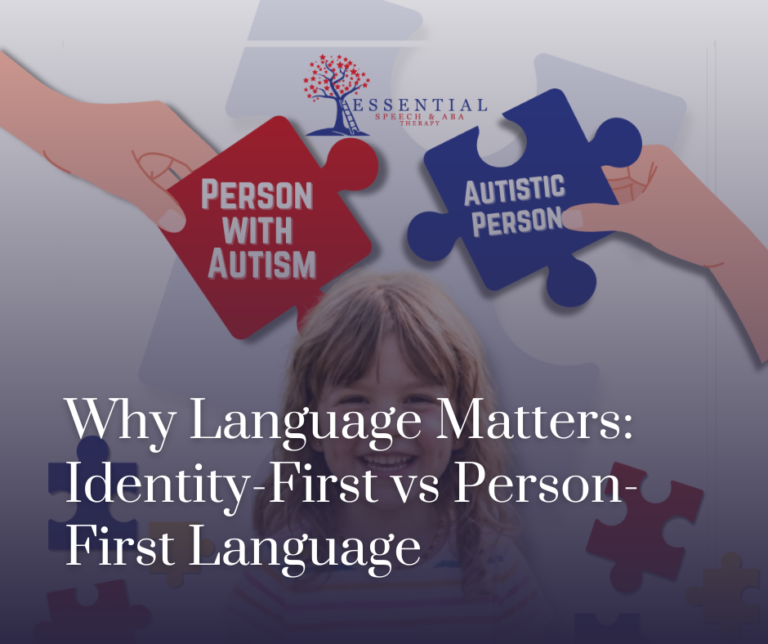
The importance of identity-first language (some people may prefer “autistic person” rather than “person with autism”)
The rejection of therapies that prioritize compliance over well-being
The need for sensory-friendly environments
The value of special interests as sources of joy, learning, and expertise
By listening to autistic voices, we ensure that acceptance is not something done to autistic people, but something built with them.
Beyond Childhood: Lifelong Acceptance
Acceptance must extend far beyond childhood. Acceptance in adulthood is often under-discussed, but just as important. Autistic adults continue to face barriers in employment, healthcare, housing, and community participation.
Workplaces benefit when they welcome neurodiverse teams that bring fresh perspectives and innovative problem-solving approaches. Healthcare providers need training to understand sensory sensitivities and diverse communication styles. Communities thrive when they create space for varied social interactions and accessible environments.
As clinicians, educators, employers, and citizens, we share responsibility for dismantling systemic barriers and advocating for inclusive policies that support autistic individuals throughout their lives. Acceptance is a lifelong commitment to equity, dignity, and opportunity.
Without Difference, There’s No Progress
Going back to the previously stated quote:
“Without difference, there’s no perspective. And without perspective, there’s no progress.”
Autism acceptance challenges us to broaden our understanding of communication, intelligence, success, and belonging. It asks us to create a world that values diverse ways of thinking, feeling, and interacting—not as exceptions to be managed, but as essential to our shared growth.
When we honor diversity, innovation thrives. When we welcome multiple perspectives, compassion deepens. When we move beyond awareness into authentic acceptance, real progress becomes possible—not just for autistic individuals, but for all of us.
Autism acceptance is not a destination. It is an ongoing practice that calls for reflection, humility, and courage. Each of us has a role to play:
Parents: Advocate for your child’s unique needs without shame or apology.
Educators: Create classrooms that celebrate and support diverse learners.
Employers: Build workplaces that recognize and value neurodivergent talents.
Clinicians: Evolve our practices with respect, partnership, and individualized care.
Media & Creators: Amplify authentic autistic voices and tell stories that reflect their full humanity.
Society: Move beyond stereotypes and embrace the full spectrum of human differences.
Acceptance means seeing the whole person, supporting their journey, and celebrating their strengths. It means believing, always, that every person brings value exactly as they are.
Because acceptance isn’t the end of the conversation — it’s where real change begins.