If you ask me what makes our clinics special, I could give you a long list.
I could talk about evidence-based practices, strong processes, clinic design, schedules, systems, training platforms, safety standards, compliance… all the things that matter behind the scenes.
But if we’re being honest? The real reason our clinics work is our staff. Our people are the thing you can’t copy and paste.
They’re the reason kids make progress. They’re the reason parents feel hopeful again. They’re the reason we can grow—without losing the heart of what we do.
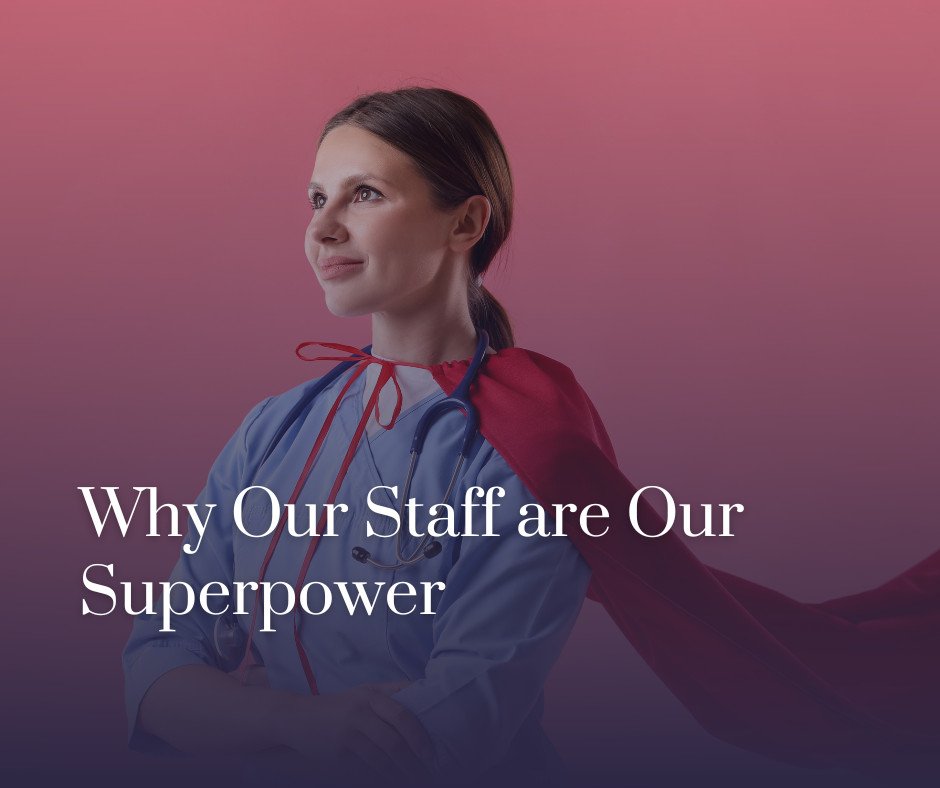
So yes, I’m saying it proudly: Our staff are our superpower.
And whether you’re a parent considering services for your child, or a future franchise owner exploring what it takes to run a successful clinic… this matters more than anything.
Because great clinics aren’t built on a logo, a building, or even a business plan.
They’re built on people.
This Work Is Personal — and We Never Forget That
When a family walks into one of our clinics for the first time, they’re usually not just “checking out a program.”
They’re walking in with questions, stress, hope, exhaustion, and sometimes a fear they don’t even know how to put into words yet. A lot of families have been waiting months to get to that moment. Sometimes longer.
They’ve sat through evaluations. They’ve gotten a diagnosis. They’ve googled at 2AM. They’ve been on hold with insurance. They’ve tried to explain their child to people who don’t understand.
So when they finally walk through our doors… I don’t want them to feel like they’re walking into something cold or clinical. I want them to feel like they found their people because early intervention isn’t just about getting services. It’s about getting support.
The truth is, families don’t just choose clinics—they choose the team inside the clinic.
Our Model Works Because We’re Team-Based (Not Silo-Based)
We serve children ages 18 months through 6 years old, which means we’re working in one of the most important developmental windows there is. This stage of life is fast. It’s intense. It’s full of growth. It’s also full of unpredictable moments, big feelings, and very real challenges.
And here’s something I feel strongly about: Kids don’t develop in separate categories.
Speech impacts behavior. Behavior impacts learning. Learning impacts confidence. Confidence impacts participation. And participation impacts everything. That’s why we don’t operate like separate providers doing separate things in separate rooms.
We provide: ABA Therapy, Speech Therapy, and Occupational Therapy, and we do it as a team.
That means we don’t leave families trying to piece everything together on their own. Our staff collaborate, communicate, align strategies, and work toward the same goals. When the whole clinic is rowing in the same direction, the child benefits.
And families feel the difference.
Parents Can Tell Within 5 Minutes If a Team “Has It”
This is one of those things families don’t always say out loud, but it’s true: Parents can tell almost immediately whether a clinic is going to be a good fit. Not because they know all the clinical terms.Not because they understand every therapy method.
But because they can feel things like: how staff speak to children, how calm the environment feels, whether people look confident or chaotic, whether the clinic runs with structure, whether staff are warm but still professional, & whether people seem like they actually want to be there
A parent might not know the name of a therapy strategy, but they know when someone is patient. They know when someone is kind. They know when someone is experienced. They definitely know when someone is just going through the motions.
Our goal is for every family to walk in and think: “Okay… these people know what they’re doing.”
And “My child is safe here.” That is priceless.
What Makes Our Staff Different (In the Ways That Actually Matter)
A lot of places have “staff.” But what makes our staff a superpower is the combination of skill, consistency, and character that shows up every day.
They’re highly trained — and they take their role seriously. We don’t believe in winging it. This isn’t babysitting. This isn’t “let’s just see what happens.” Our staff are trained and supported to work with: children learning communication skills, children who struggle with transitions, children with sensory needs, children who have big emotions, children who need help learning how to play and connect, children who are learning the building blocks for school readiness
They understand that progress is not an accident. Progress is built.
They bring calm energy, even when things get chaotic and if you’ve ever been around a group of toddlers—especially toddlers who are learning emotional regulation—then you already know: There will be chaos. There will be tears. There will be “no.” There will be the world’s strongest little bodies going limp like noodles. There will be moments where you think, “HOW is this child so fast?!”
What makes our team special is that they stay grounded in those moments. They don’t escalate. They don’t take it personally. They don’t panic. They respond with structure and confidence. Because kids don’t need perfect days, they need stable adults.
They’re consistent, and kids thrive on consistency
Children learn faster when expectations are predictable. That means: clear routines, consistent reinforcement, consistent responses, consistent follow-through, and a team that isn’t constantly changing the plan every five minutes. Our staff understands that consistency is not boring. Consistency is safe and safety is where learning happens.
They’re creative — because engagement matters
Our kids are little. Their attention spans are really short. Their motivation is specific
Therapy has to be meaningful. We want kids to feel like coming to the clinic is a place where they can: learn through play, build skills through routines, practice communication in real moments & feel successful and proud of themselves
Our staff are amazing at finding what works for each child, not what’s easiest for the adult. And that’s a big deal.
They genuinely care — but they don’t let emotions replace professionalism
Compassion matters, but compassion without skill doesn’t get kids where they need to go. Our staff brings both. They can be warm AND structured. Fun AND intentional. Gentle AND firm. Supportive AND accountable. That balance is what makes therapy effective.
For Parents: You’re Not Just Dropping Your Child Off — You’re Joining a Team. If you’re a parent reading this, I want you to know something clearly: We don’t just see your child’s goals. We see your family. We understand that therapy impacts your whole life.
We’re not here to judge you. We’re here to support you and walk alongside you. When things feel hard (because they will sometimes), we don’t disappear or get uncomfortable.
We help you problem-solve. Early intervention isn’t always a straight line. It’s progress, plateaus, breakthroughs, setbacks, learning, and re-learning. And the right team makes it feel possible.
The Roles That Create Stability (And Why Structure Matters)
Our clinics operate with intentional role structure because strong clinics don’t run on vibes — they run on systems. A typical clinic team includes:
A Franchise Owner who sets the culture, holds standards, and supports leadership;
A BCBA who provides clinical oversight, programming, supervision, and ensures care quality;
A Speech-Language Pathologist who focuses on communication development and functional language;
An Occupational Therapist who works on sensory regulation, motor development, and foundational independence skills;
An Office Manager or Director who maintains operational stability, supports parents, and leads the front end of the clinic;
RBTs and BTs who carry out direct therapy and daily skill building.
This structure matters because everyone needs clarity around who leads what, who supports what, what “good” looks like, what the standard is, and how quality is maintained. When roles are unclear, a clinic becomes reactive. When roles are clear, a clinic becomes stable.
Our Staff Don’t Just Deliver Therapy — They Create Momentum
One thing I’ve learned across every clinic I’ve supported is that there are two types of therapy environments. The first is where every day feels like survival mode. Everyone is exhausted, parents feel unsure, progress feels slow, turnover is high, and the clinic constantly feels behind.
The second is where the clinic feels like it has momentum. Staff know what they’re doing, children are engaged, parents feel hopeful, communication is strong, and systems support the work instead of fighting against it. Our goal is always the second environment, and it doesn’t happen because people simply “try harder.” It happens because the team is trained, aligned, and supported.
Why I’m Proud of Our People
I’ve seen our staff celebrate wins that most people wouldn’t even notice — the first time a child points, tolerates a transition, says “help,” sits at a table without stress, waves goodbye, answers a question, or plays next to another child.
Those moments aren’t small to us; they are huge. Our staff show up for those milestones every single day with patience, intention, and consistency. That’s why we don’t just say we have a great team. We protect our standards, we train continuously, we build systems that support staff instead of burning them out, and we take pride in doing this the right way — because families deserve nothing less.
Final Thought: Our Staff Are Our Superpower — Because That’s What Your Child Needs
You can have a beautiful clinic with the newest toys, perfect furniture, polished schedules, and the best technology available, but none of it matters without exceptional people. Our staff are our superpower because they turn care into progress. They turn plans into action, uncertainty into support, and daily routines into learning opportunities. They transform “I don’t know what to do” into “we’ve got this.”
Whether you’re a parent searching for the right place for your child or a future owner hoping to build something meaningful, the truth remains the same: we are proud of our team, we invest in our people, and we will never treat quality like an optional feature. What we do is serious work. It changes lives. And we don’t do it alone — we do it with a team that shows up, stays steady, and makes progress possible.
That’s our superpower.